Kitchen Drain Clogged in Dallas? Here's What to Do
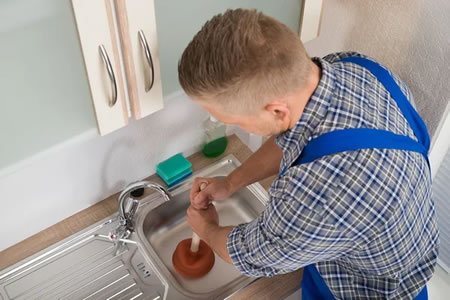
A clogged kitchen drain is one of those problems that announces itself at the worst possible moment. You are cleaning up after dinner and the sink stops draining. Or you turn on the garbage disposal and water backs up into the other basin. You try running the hot water for a minute — old advice that rarely works — and nothing changes.
Kitchen drains clog differently than bathroom drains do. The culprits are not hair and soap scum. They are grease, food particles, and — in Dallas in particular — mineral buildup from some of the hardest tap water in Texas. Understanding what is actually in your kitchen drain line tells you what will clear it and what will not.
What Actually Clogs Dallas Kitchen Drains
Grease and Cooking Fat
This is the main cause of kitchen drain clogs in DFW — and the one most homeowners underestimate. Grease goes down the drain as a warm liquid and cools inside the pipe, where it sticks to the pipe wall and slowly solidifies. Over weeks and months, each meal adds another layer. The pipe does not clog all at once. It narrows gradually until one day nothing drains at all.
The hot water and dish soap approach — running hot water while pouring liquid soap down the drain — only moves the grease further into the line. It does not dissolve it. The grease just cools and re-deposits 10 or 20 feet deeper, where it is harder to reach.
Dallas Hard Water Mineral Scale
Dallas tap water runs between 140 and 160 mg/L of dissolved minerals — firmly in the hard water range, and among the highest in Texas. Those minerals, mostly calcium and magnesium picked up as water passes through North Texas limestone, do not stay in solution when they meet the grease coating your drain pipe walls. They bond to it. Over time, that layer of grease and mineral scale narrows the pipe in a way that neither hot water nor a standard drain cleaner can dissolve.
This is why kitchen drain clogs in Dallas tend to be more stubborn than those in cities with softer water. The grease problem is everywhere. The mineral scale problem is specific to North Texas.
Soap Buildup and Food Debris
Dish soap residue combines with hard water minerals to form a soap scum that adheres to pipe walls much the way grease does. Food particles — coffee grounds, small food scraps, starchy residue from pasta water — accumulate in the sticky layer created by grease and soap scum. Over time, the pipe interior starts to resemble a layered deposit rather than a clear line.
Garbage Disposal Misconceptions
A garbage disposal does not eliminate the drain clog problem — it changes what goes into the pipe. Disposal units grind food waste fine enough to pass through the drain, but ground food particles still contribute to buildup in the line. Starchy foods (potato peels, pasta, rice) expand after grinding and clump together. Fibrous foods (celery, artichoke, corn husks) can wad up in the disposal itself rather than passing cleanly through. The drain past the disposal accumulates buildup the same way a disposal-free sink does — just with smaller particles.
Where Is the Clog, Actually?
The location of the blockage determines what can clear it. Most homeowners assume the clog is right at the drain opening, where a plunger or a short drain snake might reach. It usually is not.
At the P-trap (0 to 5 feet)
The P-trap is the curved pipe section directly under the sink. It traps water to block sewer gases, but it also catches solid debris — a dropped fork, a clump of food that missed the disposal, accumulated scum at the bend. A P-trap clog is the closest and most accessible blockage. In most cases it can be cleared by removing the trap and cleaning it manually, or with a short plunger run.
In the branch drain line (5 to 40 feet)
Past the P-trap, the kitchen drain runs into a branch line that connects to the main drain stack. This is where most grease and mineral scale accumulates — far enough in that a standard plunger does not reach it, and deep enough that a hardware-store drain snake may not have the length or torque to clear it. Cable drain cleaning from a cleanout point is the right tool for this range.
At or past the main stack connection
If multiple drains are slow or backing up at the same time — the kitchen sink and the dishwasher, or the sink and a nearby bathroom fixture — the blockage may be at the main stack connection or in the main sewer line. A kitchen drain that drains slowly but backs up when you run the dishwasher is a classic sign of a shared-line blockage. This requires main line cleaning, not just kitchen drain work.
What Actually Clears a Clogged Kitchen Drain
| Method | When It Works | When It Does Not |
|---|---|---|
| Plunger | P-trap clog or very shallow blockage | Grease deep in the branch line |
| Remove and clean P-trap | Solid debris caught at the bend | Buildup further in the pipe |
| Enzyme drain treatment | Mild organic buildup over time (takes days) | A full or near-full blockage |
| Chemical drain cleaner | Light organic clog near the opening | Hardened grease 10+ feet in; damages older pipes with repeated use |
| Cable drain cleaning | Grease and debris in the branch line, up to 100ft | Pipe wall coating that cable passes through without removing |
| Hydrojetting | Heavy grease, mineral scale, recurring clogs | Not needed for simple recent clogs; starting at $349 |
| Boiling water + dish soap | Rarely — only very fresh, light grease near the opening | Any clog more than a few days old or more than 2–3 feet in |
When to Call a Professional
Some kitchen drain clogs are straightforward enough to handle yourself. If the P-trap has visible debris, cleaning it manually takes 10 minutes and a bucket. If the drain just slowed down recently and a plunger clears it, you are done.
Call Drain Doctor for kitchen drain cleaning when:
- The drain has been slow for more than a week and plunging has not helped
- The same drain has clogged more than once in the past few months
- Water is backing up into the other sink basin or the dishwasher
- The garbage disposal runs but water still sits in the basin
- You have used a chemical drain cleaner and the drain is still slow
- Multiple drains in the kitchen or nearby bathroom are moving slowly
Recurring clogs are the clearest signal. The first time you clear a kitchen drain clog with a plunger, the problem is the clog. The second time the same drain clogs, the problem is buildup in the pipe that the plunger cannot reach. A third clog forms faster because the pipe is already coated.
Cable drain cleaning goes into the line and clears the actual buildup. Hydrojetting uses high-pressure water to scour the pipe wall and is the better option when grease has been building up for years, or when a drain has clogged repeatedly and cable cleaning keeps bringing it back.
If your kitchen drain keeps clogging, it’s time to address the root of the problem with professional drain cleaning in Dallas before the buildup leads to a complete blockage.
What Kitchen Drain Cleaning Costs in Dallas
Drain Doctor uses flat-rate pricing. You get the price before work starts — no diagnostic fees, no hourly rates, no surprise line items.
| Service | Flat-Rate Price |
|---|---|
| Kitchen sink — cable cleaning via accessible cleanout | $229 |
| Kitchen sink — hydrojetting via outside cleanout | $349 |
| Kitchen sink add-on (during another service call) | $115 |
| Main sewer line — cable cleaning | $269 |
| Main sewer line — hydrojetting | $399 |
| Add-on: camera inspection during service | $99 |
Hydrojetting is done via an outside cleanout only — Drain Doctor does not hydrojet from inside the house. If there is no accessible cleanout, cable cleaning is the method used. Your technician will confirm the right approach and the price before starting.
Same-Day Kitchen Drain Cleaning in Dallas
Drain Doctor has been clearing kitchen drains across Dallas-Fort Worth since 1973. More than 100,000 drains cleaned in the DFW area. Call before 1pm Monday through Saturday and we can have a technician at your home the same day.
Kitchen drain cleaning starts at $229. Flat-rate, no diagnostic fees, no upsells.
Monday-Saturday, 8am–6pm | Serving all of Dallas-Fort Worth
Kitchen Drain Clog Questions - Answered
Cable cleaning via an accessible cleanout is $229. Hydrojetting via an outside cleanout is $349. Both are flat-rate — the price is confirmed before any work begins. No diagnostic fees, no hourly rates. If you need the service during an existing appointment for another drain, the add-on rate is $115. See our full pricing page for the complete list.
Recurring kitchen drain clogs almost always mean grease has built up in the branch line beyond where a plunger or short snake can reach. Dallas hard water (140–160 mg/L of dissolved minerals) makes this worse by bonding calcium and magnesium to the grease layer. Each clog forms faster than the last because the pipe is already narrowed. Cable cleaning or hydrojetting clears the actual buildup rather than just punching a temporary hole through it.
Chemical drain cleaners can dissolve a light organic clog near the drain opening. They do not clear hardened grease 10 or more feet into the line. With repeated use they also degrade PVC and older pipe materials. If the drain has clogged more than once, or if it is still slow after a chemical treatment, the blockage is deeper than the product can reach.
Yes. Call before 1pm Monday through Saturday and we can typically schedule same-day service in Dallas and throughout the DFW Metroplex. Kitchen drain cleaning starts at $229 flat-rate. Call 214-357-4400 or book online.